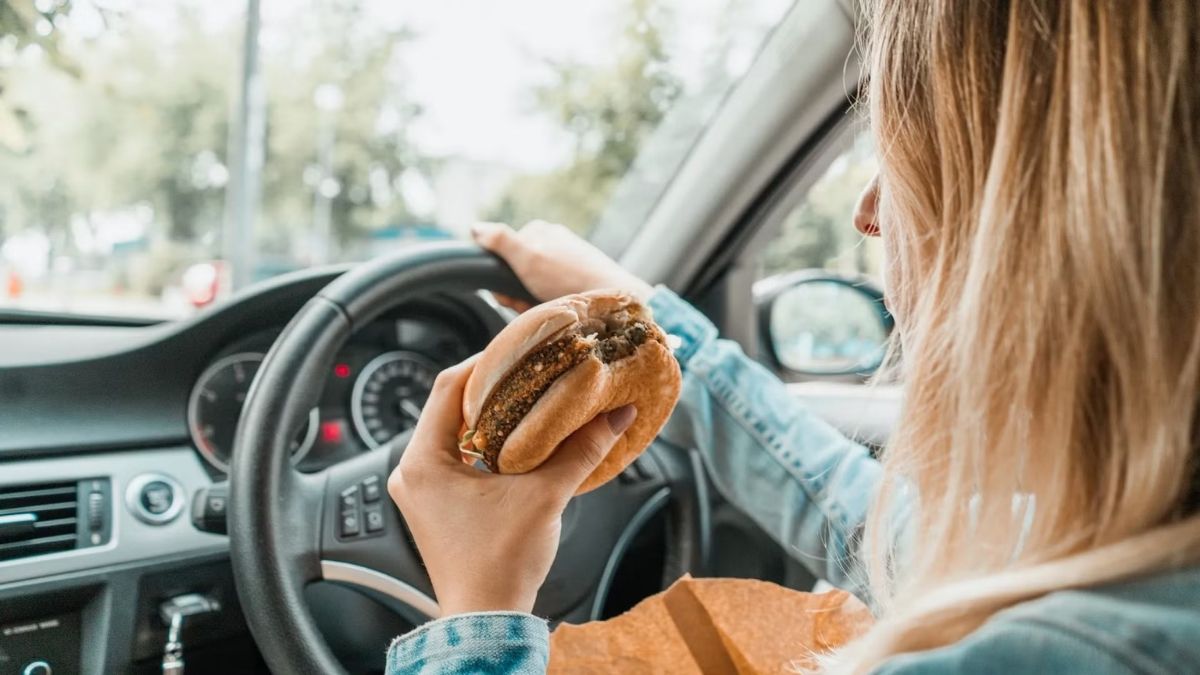
Canadian motorists are officially being warned: eating behind the wheel is no longer seen as harmless or casual. Under stricter distracted driving enforcement, drivers may now face fines reaching up to $10,000 in serious cases—especially when eating leads to unsafe vehicle control or accidents.
Across provinces, enforcement agencies are treating food-related distractions with heightened scrutiny, noting that even quick bites or sips can divert attention long enough to cause road mishaps. Authorities say this renewed focus is a response to the rising number of collisions caused by inattention.
Why Canada Is Cracking Down on Eating Behind the Wheel
Distracted driving remains a top cause of road accidents nationwide. Until recently, most drivers considered eating or drinking in the car a low-risk behavior. But enforcement agencies now view these actions as part of a broader category of distractions that take hands, eyes, or focus away from driving.

While the laws have not changed substantially, how they’re enforced has. Police are now more likely to issue tickets if they observe drivers engaging with food in ways that compromise road safety. Even actions like unwrapping a burger, holding a drink, or glancing at a meal can lead to a citation if they interfere with driving ability.
What Penalties Could You Face? A Provincial Breakdown
Penalties for distracted driving vary across provinces, but the consequences escalate based on the violation’s severity, repeat offenses, or whether it results in a collision. Here’s how the penalties typically stack up:
| Violation Type | Possible Fine | Additional Consequences |
|---|---|---|
| Eating while driving (minor distraction) | $300 – $1,000 | Demerit points, warning ticket |
| Second or repeat offence | $1,000 – $3,000 | Increased points, licence suspension risk |
| Unsafe driving linked to eating | $3,000 – $5,000 | Higher insurance rates |
| Collision caused by eating distraction | Up to $10,000 | Licence suspension, court action, criminal charges |
A conviction may also trigger major increases in car insurance premiums, especially for repeat violators.
यह भी पढ़े:
 Goodbye to Unclaimed Money – CRA Settlement Lets Canadians Recover Unclaimed Money in 2026
Not a Total Ban—But Far Stricter Oversight
Transportation authorities stress that there is no complete ban on eating in vehicles. The concern lies in whether the act of eating interferes with your ability to drive safely.
Officials note that eating while driving often leads to:
- Reduced reaction time
- Lane drifting
- Impaired awareness of pedestrians or cyclists
- Slower response to sudden hazards
In response, enforcement has ramped up, particularly in urban centres and during peak driving hours, when risks are higher. Drivers are advised to eat before their trip or pull over if they need a snack.

How Police Are Enforcing Distracted Driving Laws
Police forces across Canada are deploying a variety of tools to crack down on distractions behind the wheel. These include:
- Unmarked police vehicles monitoring behavior in traffic
- Roadside observation points during high-traffic hours
- Post-accident investigations to determine if distraction played a role
- Dashcam footage and witness reports to support citations
Officers are trained to detect single-handed steering, looking down, or holding food, which are now red flags. With enforcement becoming more aggressive, eating while driving is no longer flying under the radar.
Why This Change Is Happening Now
The shift is tied to broader goals of improving public safety and reducing preventable road deaths. Distracted driving has become one of the most persistent and dangerous issues for Canadian roadways. Though smartphones are often cited as the top culprit, officials say that eating and other manual distractions contribute significantly to loss of control incidents.
यह भी पढ़े:
 Canada Launches $1800 Family Grant From January 10, Eligibility Rules and Payment Timeline
Changing long-held habits, like eating behind the wheel, is seen as necessary to build safer roads.
What This Means for Drivers Across Canada
The message from law enforcement is clear: your attention belongs fully on the road. Any activity—even one considered routine—could result in serious legal and financial consequences if it interferes with your driving.
For drivers, the easiest way to avoid fines and stay safe is straightforward: eat while parked, not while driving.
यह भी पढ़े:
 CRA Ends Paper Notices in 2026: CRA’s Mandatory Direct Deposit Rule Starts 10 January 2026
Best Practices for Avoiding Distracted Driving Charges
To avoid hefty fines and potential accidents, follow these safety guidelines:
- Eat before you drive or wait until you’ve stopped in a safe area.
- Do not unwrap or prepare food while the vehicle is moving.
- Keep both hands on the wheel and eyes on the road at all times.
- If necessary, pull over safely to eat or drink—especially during long trips.
- Treat eating while driving with the same seriousness as texting or adjusting GPS.
Legal Grey Area or Growing Enforcement Reality?
While no federal law explicitly bans eating while driving, the growing trend of ticketing food-related distractions shows that police interpret distracted driving laws more broadly than ever. If your eating interferes with your control of the vehicle, you can and likely will be penalized.
In short, intent doesn’t matter—outcome does. If your lunch leads to a lane swerve or delayed braking, you could be looking at thousands in fines and a licence suspension.

Frequently Asked Questions (FAQs)
1. Is eating while driving now illegal in Canada?
No, it is not outright illegal. However, if eating interferes with safe driving, it can lead to a distracted driving charge under existing laws.
2. What’s the maximum fine for eating while driving in Canada?
In serious cases—especially if it results in an accident—the fine can reach up to $10,000, along with possible licence suspension and insurance rate hikes.
3. Can police really give me a ticket just for holding food?
Yes. If police determine that handling food impacts your driving control or focus, you can receive a ticket under distracted driving regulations.

4. Is this a new law?
No, but enforcement is now much stricter. Authorities are cracking down on all forms of distracted driving, including eating.
5. How can I avoid these penalties?
Avoid eating behind the wheel, keep both hands on the wheel, and pull over safely if you need to eat during a trip.